Quick AnswerWhat is Overtrading?
Overtrading is the act of executing too many trades or taking setups outside of your trading plan. It is typically driven by emotional impulses like FOMO, greed, or the desire to win back losses, leading to excessive fees and compounding losses.
How to Stop Overtrading:
- Set a Hard Trade Limit: Define a maximum number of trades per day (e.g., 3-5 trades).
- Identify Emotional Triggers: Recognize when you are trading out of boredom or frustration.
- Use a Behavioral Lock: Utilize software like TiltGuard to automatically lock your platform when you reach your daily limits, removing the ability to overtrade.
01. What Is Overtrading?
Overtrading is the single most common reason profitable traders fail. It is not simply "trading too much"—it is the act of taking trades that deviate from your trading plan, usually driven by an emotional compulsion rather than a statistical edge.
In the professional trading world, volume does not equal profit. In fact, for retail traders, the correlation is often inverse: the more frequently you trade, the higher your likelihood of ending the day red. This is due to a combination of transaction costs, spread, and—most critically—decision fatigue.
Trading discipline is a finite resource. Every decision you make depletes your mental capital. When a trader overtrades, they are no longer operating from a state of peak performance. They enter a "fugue state" where risk management rules are ignored, position sizing becomes erratic, and the primary goal shifts from "executing a system" to "getting dopamine" or "recovering losses."
The Psychological Trap
Trading psychology mistakes often stem from the illusion of control. Overtrading is an attempt to force the market to give you what you want, right now. But the market is neutral. It does not care about your P&L, your rent, or your ego.
Whether you are a scalper taking 50 trades a day or a swing trader taking 5, overtrading occurs the moment you take a setup that isn't in your playbook. It is a breach of contract with yourself.
"This is what most retail traders experience.
A few small wins.
A small drawdown.
Then one emotional trade that erases weeks of progress."
The collapse doesn’t happen because your strategy failed.
It happens because discipline failed.
The Emotional Equity Curve
Most accounts don't fail slowly. They collapse after emotional trades.
Representative illustration based on common retail trading behavior.
Stop the spiral before it starts.
TiltGuard locks your trading platform automatically when you hit your daily limit. No willpower required.
02. Why Traders Overtrade
If you know overtrading is bad, why do you keep doing it? The answer lies in neuroscience, not just "lack of discipline."
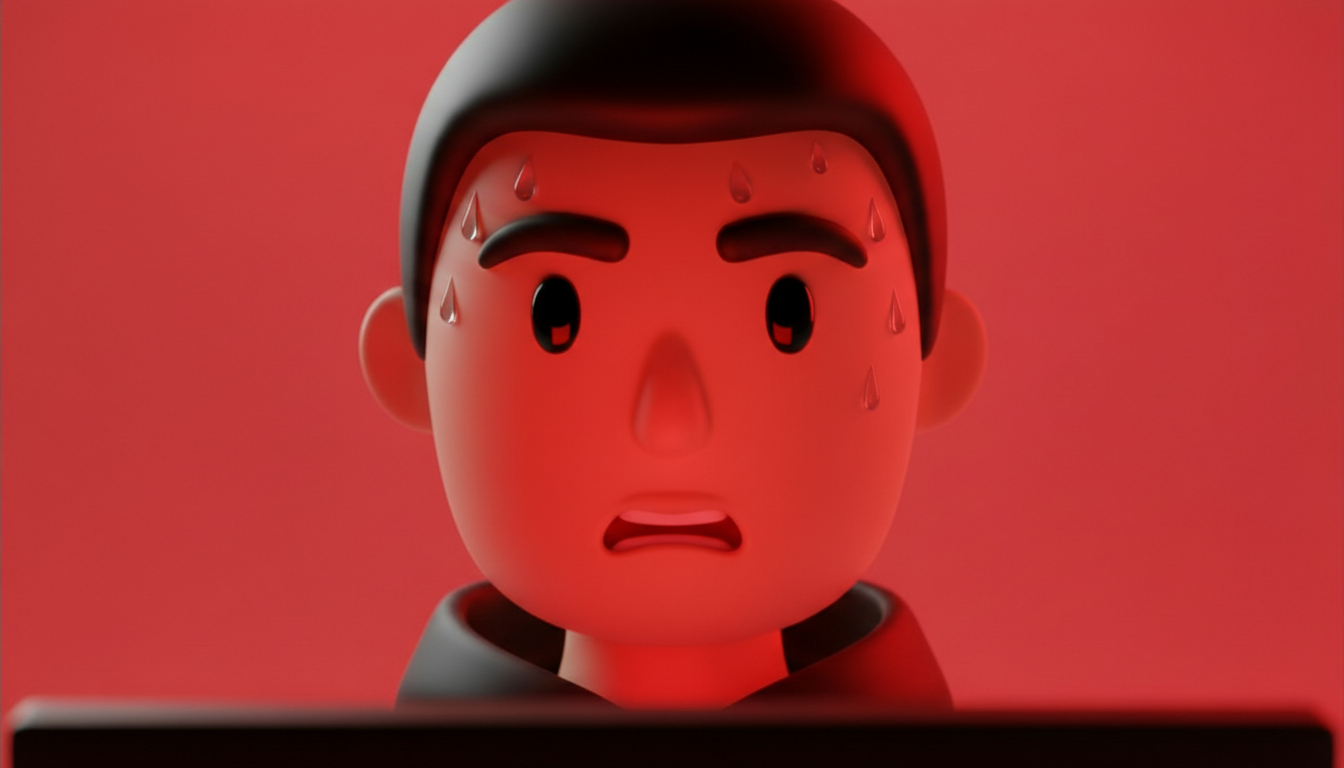
1. Revenge Trading & The Amygdala Hijack
When you take a loss, your brain registers it as physical pain. The amygdala—the threat detection center of your brain—activates the fight-or-flight response. In trading, "fight" manifests as revenge trading. You immediately re-enter the market to "win back" what was taken from you. In this state, your prefrontal cortex (the logic center) goes offline. You are literally incapable of rational thought.
2. The Dopamine Loop (FOMO)
Trading is an intermittent reward system, similar to a slot machine. The uncertainty of the outcome releases dopamine. Impulsive trading often comes from a desire to feel that rush, especially on slow market days. Fear Of Missing Out (FOMO) triggers the same neural pathways—seeing a big move you missed creates a sensation of loss, driving you to chase price at the top.
More Trades ≠ More Profit
Profitability typically declines after 3–5 trades per day.
Representative illustration based on common retail trading behavior.
3. The Recency Bias
If you overtraded yesterday and got lucky (made money), your brain reinforces that bad behavior. "I broke my rules and got paid." This is the most dangerous outcome for a trader. It cements emotional trading habits that will eventually lead to a blown account when luck runs out.
Toxic Mindset
"I need to make $500 today to pay bills."
Pro Mindset
"I will execute my edge perfectly, whatever the result."
03. The Cost of Overtrading
The cost isn't just the money you lose on bad trades. It's the destruction of your career potential. The "Death Spiral" of a blown trading account almost always follows the same pattern:
- 1. The TriggerA normal losing trade occurs. You feel the need to fix it immediately.
- 2. The BreachYou ignore your daily loss limit. You take a sub-par setup with increased size to "make it back in one shot."
- 3. The TiltThe revenge trade fails. Now you are down 3x your daily limit. Panic sets in. You start hitting buttons blindly.
- 4. The BlowupBy the time you stop, you've lost 20% or more of your account. It will take weeks of perfect trading to recover what you lost in 30 minutes.
Risk management mistakes like this are fatal. Mathematical ruin is inevitable if you cannot stop trading when you are tilted.
Your biggest risk isn’t the market.
It’s you — on tilt.
TiltGuard removes the decision at the exact moment you would have broken your rule.
04. How to Stop Overtrading
Willpower is not a strategy. You cannot "try harder" to be disciplined when your biology is working against you. You need systems and discipline tools that remove the option to fail.
Step 1: Define Hard Rules
You must have concrete trading rules. "I will stop if I lose too much" is vague. "I will stop trading at -$500" is a rule. Define your max daily loss, max trades per day, and trading hours. Write them down.
The Discipline Gap
Average max drawdown comparison.
Representative illustration based on common retail trading behavior.
Step 2: Automate Enforcement
This is the missing link. Most traders have rules, but they break them in the heat of the moment. You need a circuit breaker. This is why we built TiltGuard.
TiltGuard acts as an external risk manager. It integrates directly with your browser to monitor your P&L or trade count on platforms like TradingView, Tradovate, and Topstep.
- Hard Locks: When you hit your daily loss limit or trade cap, the extension blocks access to the trading platform.
- Cool-down Timers: Lock yourself out for 15 minutes after a losing trade to force a mental reset.
- No Override: In "Beast Mode," you cannot disable the extension until the next day.
Step 3: Shift Identity
Stop trying to be a "rich trader" and start trying to be a "disciplined risk manager." The money is a byproduct of the process. If you can survive the learning curve without blowing up, you have a chance. If you overtrade, you have zero chance.
05. Overtrading vs. Active Trading
A common misconception is that "trading a lot" equals overtrading. This is false. Scalpers may take 20 trades a day and be perfectly disciplined, while a swing trader taking one trade outside their plan is overtrading.
The difference between active trading vs overtrading comes down to your trading plan.
- Active Trading: Executing a high volume of trades because your edge (strategy) is presenting frequent opportunities. Every trade meets your criteria.
- Overtrading: Executing trades because you feel bored, anxious, or desperate to recover a loss. You are trading your P&L, not the chart.
So, how many trades per day is too many? There is no magic number. However, for most developing retail traders, cognitive decline sets in after 3-5 intense decisions. Beyond this point, you are statistically more likely to make trading psychology mistakes.
Frequently Asked Questions
How do I stop overtrading?
The most effective way is to remove the ability to trade once you hit your limits. Using a tool like TiltGuard to physically lock your platform prevents emotional overrides. Combine this with strict rules: set a max number of trades per day (e.g., 3 trades) and a hard daily loss limit.
Is overtrading caused by emotions?
Yes. It is primarily driven by fear (of loss or missing out) and greed. The physiological dopamine response to uncertainty creates a compulsion loop similar to gambling addiction, bypassing logical decision-making.
Why do traders revenge trade?
Revenge trading is a fight-or-flight response to financial pain. The brain seeks to eliminate the pain of a loss immediately by making the money back. It is an emotional defense mechanism that usually results in larger losses.
What is a good daily loss limit?
A sustainable daily loss limit is typically 1% to 2% of your total account balance. For funded trader accounts (prop firms), it should be based on your drawdown buffer—usually no more than 10-15% of your total allowed drawdown in a single day.
How many trades per day should a day trader take?
Quality over quantity. Most profitable retail day traders take between 1 to 5 high-quality trades per day. Taking more than 10 trades usually indicates overtrading and leads to diminishing returns due to focus depletion and fees.